

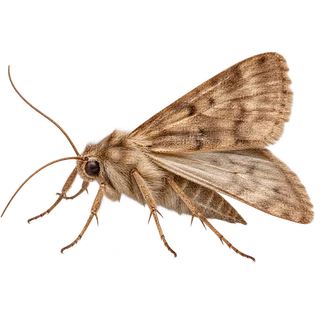
Moths
Two very different problems wearing the same name: one eats your clothes, the other gets into your food store.

How to identify it
- Size
- Clothes moths 6 to 8 mm wingspan when folded, pantry moths 15 to 20 mm
- Colour
- Clothes moths plain buff or golden, pantry moths two-tone with pale grey forewings and coppery brown tips
Clothes moths avoid light and prefer to run or crawl rather than fly. Pantry moths flutter openly around the kitchen at night.
How it behaves
Neither adult moth does the damage. Both lay eggs, and the larvae do the eating. Clothes moth larvae feed on natural fibres, wool, silk, cotton blends and anything carrying sweat or food residue. Pantry moth larvae feed inside stored grain, flour, rice, cereal, dried fruit, nuts and spices.
Where it breeds
Clothes moths breed in dark undisturbed places: the back of a wardrobe, folded clothes in storage, under heavy furniture, inside rugs. Pantry moths breed inside the food itself, and are very often brought home already inside a bag of grain or flour.
Why it matters
Not a disease risk. The cost is ruined clothing and contaminated food stores. Webbing, clumped grain and small holes in fabric are the usual first signs.
Costs nothing
Prevention first
-
01
Check newly bought grain, flour and rice before adding it to the store. Most pantry moth infestations arrive in the bag.
-
02
Move stored food into airtight containers. Larvae chew through paper and thin plastic.
-
03
Wash or air clothes before long storage, since larvae are drawn to sweat and food traces rather than clean fibre.
-
04
Empty and wipe the shelf or wardrobe completely, including corners and joints, since eggs sit in the seams.
-
05
Rotate stored food so nothing sits at the back for months.
Seasonality. Pantry moths peak in the hot humid months when stored grain holds moisture. Clothes moths are year round in undisturbed storage.
If prevention is not enough
Products for moths

Treat the empty wardrobe or shelf after clearing it out. Never spray onto food, food containers or preparation surfaces.