

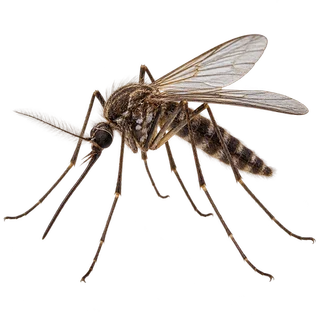
Mosquitoes
Most active at dusk and dawn, and the reason most Nigerian homes buy an insecticide at all.

How to identify it
- Size
- 5 to 10 mm long
- Colour
- Grey, light brown, some with pale banding on the legs
Long thin legs, one pair of wings, a slender feeding tube. Only the female bites; she needs a blood meal to produce eggs.
How it behaves
Drawn to exhaled carbon dioxide, body heat and perspiration, which is why some people in the same room are bitten far more than others. Most active between dusk and dawn, resting in dark corners, under furniture and behind curtains during the day.
Where it breeds
Standing water, and very little of it. A bottle cap holds enough. Common sites around a Nigerian home: uncovered water drums, blocked gutters, discarded tyres, plant pot saucers, buckets left out after rain, and any container in the compound holding rainwater.
Why it matters
Mosquitoes are the vector for malaria, and Nigeria carries a large share of the global burden. Reducing bites and breeding sites is the practical response for a household.
Educational only. No product on this site prevents, treats or cures any disease.
Costs nothing
Prevention first
-
01
Empty and scrub anything holding standing water at least once a week. Scrubbing matters because eggs stick to the sides.
-
02
Cover water storage drums and tanks with a tight lid.
-
03
Clear gutters and drains so water moves rather than pools.
-
04
Screen windows and doors, and repair torn screens.
-
05
Cover arms and legs at dusk, when biting activity peaks.
Seasonality. Numbers rise sharply through the rainy season, roughly April to October, and peak where drainage is poor.
Read next
More on mosquitoes
- The illnesses mosquitoes carry in Nigeria Malaria is the one everybody knows. It is not the only one, and the mosquitoes that carry the others bite at a different time of day. Health information
- Mosquitoes and the Nigerian rainy season Why numbers climb from April, where they breed around a typical compound, and what actually reduces bites.
- The Nigerian pest calendar What arrives with the rains, what comes with harmattan, and when to act rather than react.
If prevention is not enough
Products for mosquitoes


Aerosols for indoors. Incense sticks for verandas, gardens and outdoor seating.