

Flies
A food-safety problem more than a nuisance. Flies move between waste and what you are about to eat.

How to identify it
- Size
- 6 to 9 mm long for the common housefly
- Colour
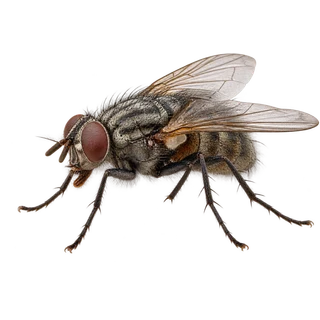
- Dull grey with four dark stripes down the thorax
Large red compound eyes, one pair of wings, a sponging mouthpart rather than a biting one.
How it behaves
Feeds by liquefying food with saliva then sponging it up, which is how contamination is transferred. Lands constantly, walks over surfaces, and moves freely between refuse and food. Active in daylight, resting on ceilings and walls at night.
Where it breeds
Moist decaying organic matter. Uncovered refuse bins, food waste, animal droppings, drains and compost. A generation can complete in about a week in Nigerian heat.
Why it matters
Flies carry bacteria on their legs and mouthparts from waste onto food and preparation surfaces. The control measure that matters most is denying them the waste in the first place.
Costs nothing
Prevention first
-
01
Keep refuse bins lidded and empty them before they fill.
-
02
Clear food waste from surfaces and sinks the same day.
-
03
Cover food and drinking water at all times.
-
04
Keep drains flushed and free of build-up.
-
05
Screen kitchen windows, which is where they arrive.
Seasonality. Present year round, worst in the hot humid months and wherever refuse collection is irregular.
Read next
More on flies
If prevention is not enough
Products for flies


Spray with doors and windows closed, then ventilate before returning to the room.