

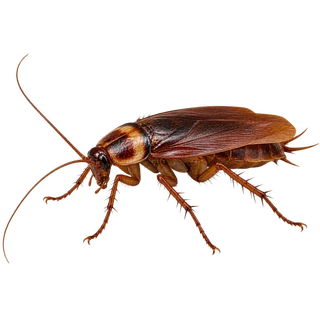
Cockroaches
Nocturnal, fast, and a sign that something in the kitchen is feeding them.

How to identify it
- Size
- 12 to 40 mm depending on species
- Colour
- Reddish brown to dark brown, glossy
Flattened oval body, very long antennae, spiny legs. Moves fast and prefers to run along edges rather than across open floor.
How it behaves
Nocturnal and thigmotactic, meaning it likes to feel surfaces on both sides of its body. That is why it lives in cracks, behind cupboards, under sinks and inside appliance housings. Seeing one in daylight usually means the harbourage is crowded.
Where it breeds
Warm, dark, humid places close to food and water. Behind fridges and cookers, under sinks, inside cupboard joints, in drain voids and stacked cartons. Egg cases are glued into cracks, so cleaning alone often misses them.
Why it matters
Walks through drains and waste then over food surfaces, carrying bacteria on its body. Shed skins and droppings are also a recognised trigger for asthma and allergy in some people.
Costs nothing
Prevention first
-
01
Fix leaking taps and pipes. Cockroaches need water more urgently than food.
-
02
Store dry goods in sealed containers rather than opened packets.
-
03
Clear crumbs and grease behind and under appliances, not just on visible surfaces.
-
04
Seal cracks and gaps around pipework and skirting.
-
05
Break down and remove cardboard cartons, which are both harbourage and food.
Seasonality. Year round indoors. Activity increases in the warm humid months.
Read next
More on cockroaches
- What flies and cockroaches carry Neither of them bites you. They make people ill by walking on food after walking on something else. Health information
- Keeping a Nigerian kitchen cockroach-free Cockroaches need water more urgently than food. Fix that first, then deal with harbourage.
- The Nigerian pest calendar What arrives with the rains, what comes with harmattan, and when to act rather than react.
If prevention is not enough
Products for cockroaches

Treat hiding places and runways rather than open floor. Spray at 20 to 30 cm and do not wash the treated surface off afterwards.