

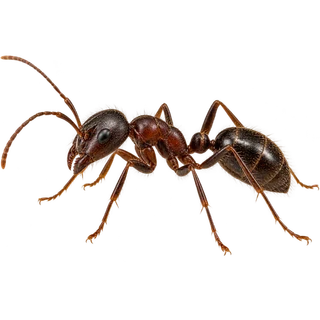
Ants
A trail of ants is a supply line. Find what it leads to and the problem usually solves itself.

How to identify it
- Size
- 2 to 15 mm depending on species
- Colour
- Black, brown or reddish
Narrow waist between thorax and abdomen, elbowed antennae. Moves in a defined line rather than wandering.
How it behaves
Scouts search alone, then lay a chemical trail that recruits the rest of the colony to a food source. The visible line is the symptom; the nest is elsewhere, often outside or inside a wall void.
Where it breeds
Nests in soil, under paving, in wall cavities, under floors and inside potted plants. Colonies can be large and long lived, and killing foragers alone does not remove the nest.
Why it matters
Mostly contamination of stored food rather than disease. Some species bite or sting, which matters more where there are small children.
Costs nothing
Prevention first
-
01
Wipe the trail with soapy water to break the chemical line, not just the ants on it.
-
02
Store sugar, cereal, biscuits and pet food in sealed containers.
-
03
Clear spills, especially sweet ones, the same day.
-
04
Seal entry points around windows, doors and pipe runs.
-
05
Keep bins lidded and rinse them out.
Seasonality. Foraging increases in the dry season as they search for water, and after heavy rain floods nests.
If prevention is not enough
Products for ants

Treat the runway and the entry point, not only the ants you can see.